Preflop is the first filter of every Hold’em hand. Good structure here prevents many expensive postflop problems.
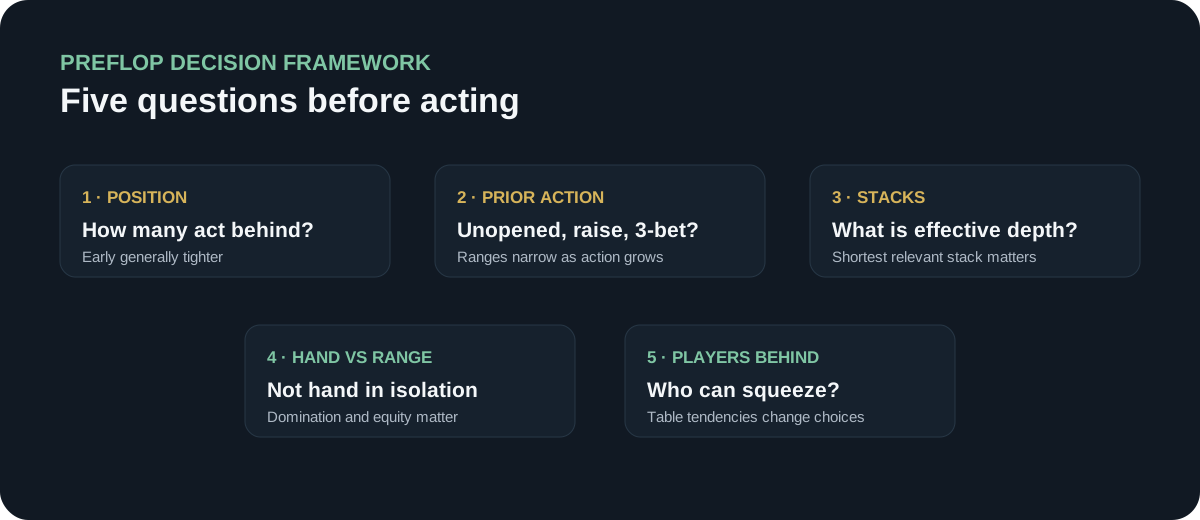
The five-question preflop check
- What is my position? Earlier seats act with more players behind and should generally enter fewer hands.
- What action happened before me? An unopened pot is different from facing a raise or a raise plus re-raise.
- How deep are the effective stacks? The shortest relevant stack limits how much can be won or lost.
- How strong is my hand against the relevant range? Absolute hand strength is not enough.
- Who is still to act? Loose callers, aggressive 3-bettors and short stacks alter the decision.
First in: raise or fold is a useful baseline
For beginners, entering unopened pots with a raise rather than routinely limping creates clearer ranges and gives a chance to win immediately. It is a baseline, not a universal rule—some live situations can justify deviations.
Facing a raise
Choose among folding, calling and 3-betting by comparing your hand with the opener’s likely range, not with a fixed list divorced from position. An early-position raise usually represents a different range from a button raise.
Avoid the domination trap
Hands such as weak offsuit aces can make a pair yet remain behind stronger aces. This is why “it can make top pair” is not enough justification to call.